

Strategy
Trade War and Government Procurement: What Canadian Firms Have Over US Competitors Right Now
September 26, 2026
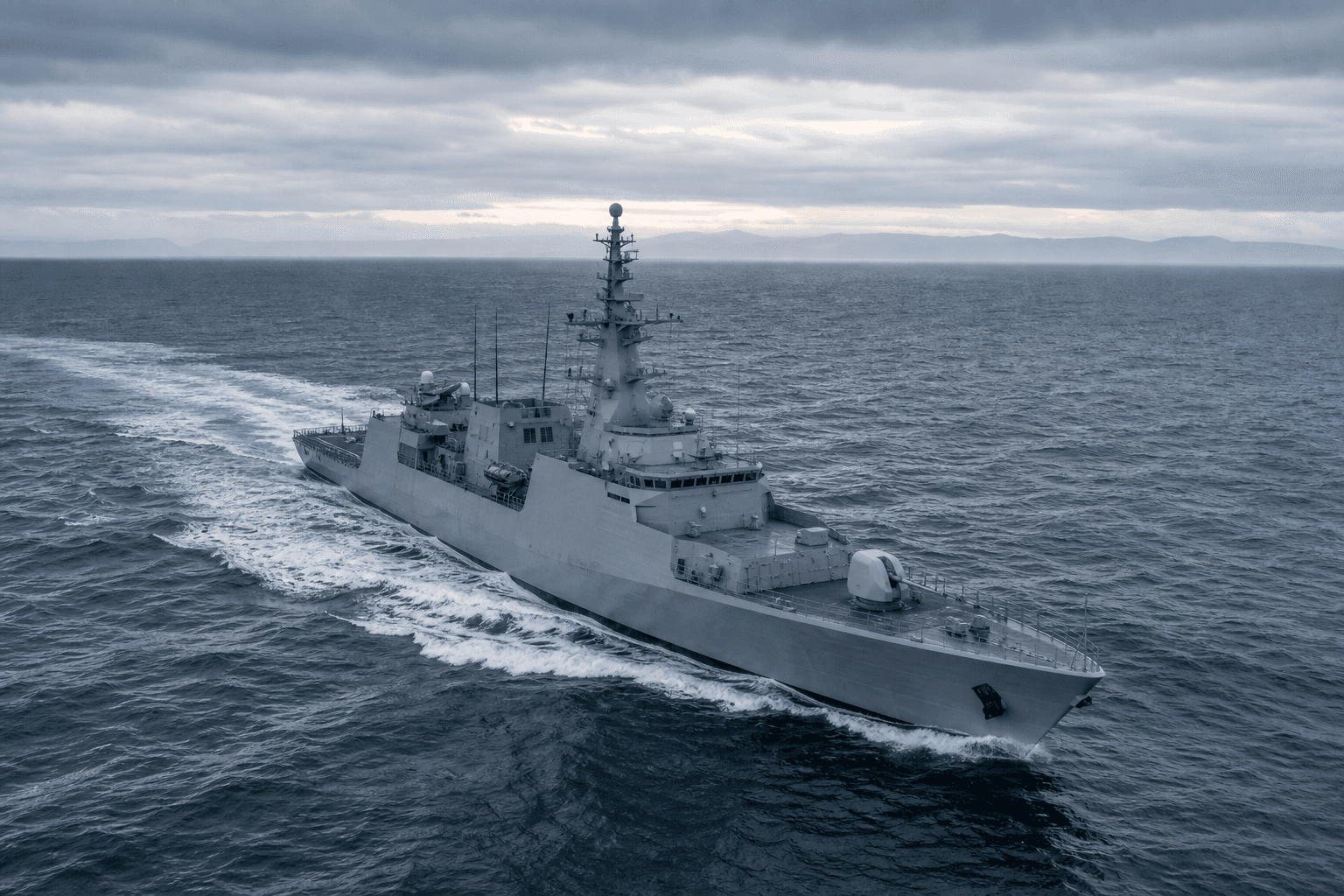
When people think of government procurement, they often picture road repairs and office supplies. But defence spending represents one of the largest and most sustained segments of Canadian public procurement — and one of the most accessible if you know where to look. The Department of National Defence (DND) and the Canadian Armed Forces (CAF) buy everything from fighter aircraft and naval vessels to cybersecurity services, catering, construction, and professional consulting.
Canada's defence budget has grown substantially in recent years, driven by NATO commitments, Arctic sovereignty priorities, and major recapitalization programs for aging equipment. DND is consistently among the top-spending federal departments, with procurement accounting for a significant share of its annual budget.
The majority of DND contracts by volume are for services and support — IT, engineering, logistics, facility maintenance, training, health services, and construction — not combat equipment. SMEs compete successfully in these categories every year.
| Category | Examples |
|---|---|
| Major equipment and platforms | Fighter aircraft, naval ships, submarines, armoured vehicles, drones, and communications systems — typically procured through long-term programs with prime contractors. |
| In-service support (ISS) | Maintenance, repair, overhaul, spare parts, and technical support for equipment already in use — ongoing contracts that can run 10–25 years. |
| Information technology and cyber | Network infrastructure, cloud services, software development, cybersecurity operations, and data analytics — one of the fastest-growing defence spend categories. |
| Construction and infrastructure | Base facilities, hangars, housing, runway repairs, and environmental remediation at CAF locations from Halifax to Esquimalt. |
| Professional and technical services | Engineering, project management, environmental consulting, legal services, and specialized technical advisory work. |
| Logistics and supply | Fuel, food services, uniforms, medical supplies, transportation, and warehousing. |
| Training and simulation | Training systems, simulators, course development, and instructional services for military and civilian personnel. |
Defence procurement follows the same federal framework as other government buying — competitive processes published on CanadaBuys, governed by trade agreements and Treasury Board policy. But DND solicitations often include additional layers that reflect the sensitivity and complexity of military requirements.
Many DND contracts require personnel to hold a Reliability Status, Secret, or Top Secret security clearance. Some solicitations require the contractor to maintain a facility security clearance. Clearances take weeks to months to process, so firms pursuing defence work should begin the application early — before a specific opportunity arises.
For major defence acquisitions, the Government of Canada requires prime contractors to invest in the Canadian economy as a condition of contract award. Under the ITB Policy (formerly Industrial and Regional Benefits), foreign prime contractors must undertake equivalent business activity in Canada — creating subcontracting opportunities for Canadian firms in manufacturing, R&D, and services.
Large-scale military acquisitions are managed through structured programs rather than one-off RFPs. The National Shipbuilding Strategy, the Canadian Surface Combatant program, fighter jet replacement, and the Armoured Combat Support Vehicle project are examples of multi-year procurement pipelines where prime contractors subcontract extensively to Canadian suppliers.
DND's IDEaS program solicits innovative solutions from Canadian companies, academia, and researchers to address specific defence challenges. Unlike traditional RFPs, IDEaS uses staged competitions — from initial concepts through prototyping to full adoption — making it an entry point for technology firms and startups without prior defence contracting experience.
Defence procurement isn't just a budget line — it has deliberate economic and strategic objectives. Understanding what military spending is designed to accomplish helps suppliers position themselves effectively.
The ITB Policy ensures that major defence purchases generate work for Canadian companies. When a foreign prime contractor wins a shipbuilding or aircraft contract, Canadian firms benefit through subcontracting, technology transfer, and supply chain integration. For a mid-size manufacturer or engineering firm, landing a defence subcontract can provide years of stable, high-value revenue.
Defence contracts — especially in-service support agreements — are structured for longevity. A maintenance contract for a fleet of vehicles or a base infrastructure support agreement can run 10 to 25 years with option periods. For businesses seeking predictable revenue beyond one-off project work, defence procurement offers contract stability that is rare in the private sector.
Programs like IDEaS and defence-related R&D funding push Canadian firms to develop technologies with dual-use potential — innovations developed for military applications often find commercial markets in cybersecurity, aerospace, autonomous systems, and advanced materials. Defence procurement acts as a catalyst for technology development that spills over into the broader economy.
Defence spending is geographically distributed across Canada — bases and shipyards in Nova Scotia, Quebec, Ontario, Manitoba, Alberta, and British Columbia all generate local procurement. The federal Indigenous Procurement Policy applies to DND contracts, and prime contractors under ITB obligations actively seek Indigenous-owned subcontractors to meet participation targets.
A track record of delivering on DND contracts is a powerful credential. Defence procurement standards for quality, security, and reliability are among the highest in public sector buying. Firms that succeed in the Canadian defence market are well-positioned to compete for NATO allied contracts and export opportunities.
Defence procurement is not reserved for large defence contractors. Thousands of Canadian SMEs hold active DND contracts. The most accessible entry points for firms new to military procurement include:
The single biggest barrier for new entrants is security clearance lead time. If you're considering defence work, start the Reliability Status or Secret clearance process now — not when you find an RFP with a 30-day closing window.
DND solicitations are published on CanadaBuys alongside every other federal department — which means they can be buried in a feed of thousands of unrelated tenders. Sidona provides specialized tracking for military and defence-related procurement, filtering DND opportunities from the broader federal stream so you see relevant contracts without manual searching.
Military spending in Canadian procurement is large, long-term, and deliberately structured to benefit the domestic economy. It creates opportunities far beyond traditional defence contractors — in IT, engineering, construction, logistics, professional services, and innovation. The requirements are higher and the compliance bar is stricter, but the contracts are stable, well-funded, and recurring. For Canadian businesses willing to invest in clearances, compliance, and relationship-building with prime contractors, defence procurement can be one of the most durable revenue streams in the public sector.
Sidona is co-founded by a Canadian veteran.
Sidona searches official government tenders across CanadaBuys, provincial boards, and US sources — then reads the RFP with you.
Every tender notice links back to the government portal it came from.
September 26, 2026

September 24, 2026

September 22, 2026